This time Amelia is the teacher and dad is the student in this valentine’s day craft.
Amelia took charge today! It was a blast. She wanted to show me how she made a Valentine’s Day craft in school this week. The good news is that this is a perfect craft for last minute Valentine creations since you probably have the supplies in your house:
Toilet paper/paper towel cardboard tube
Red or pink paint (or any color, really)
Paper
Tape
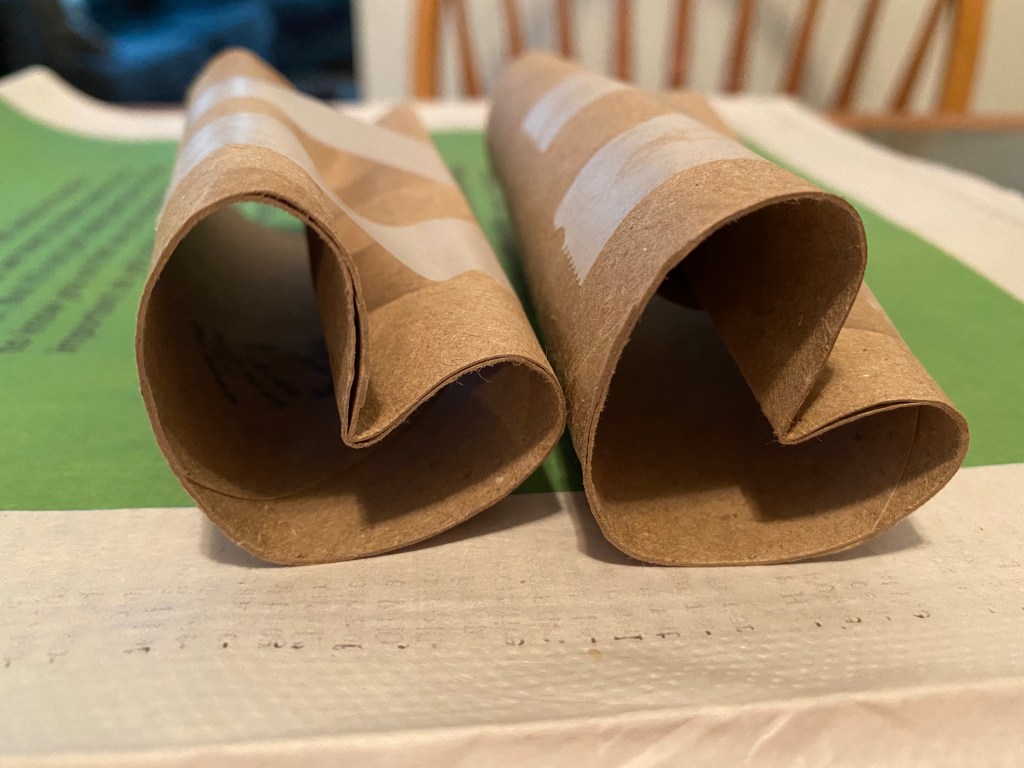
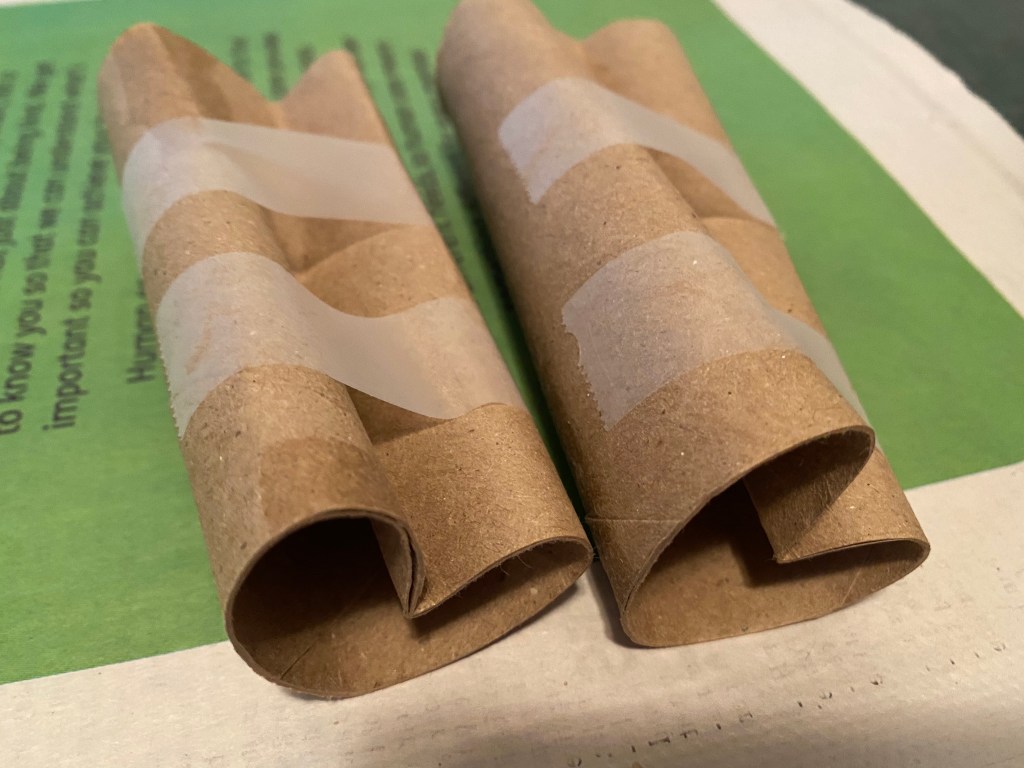
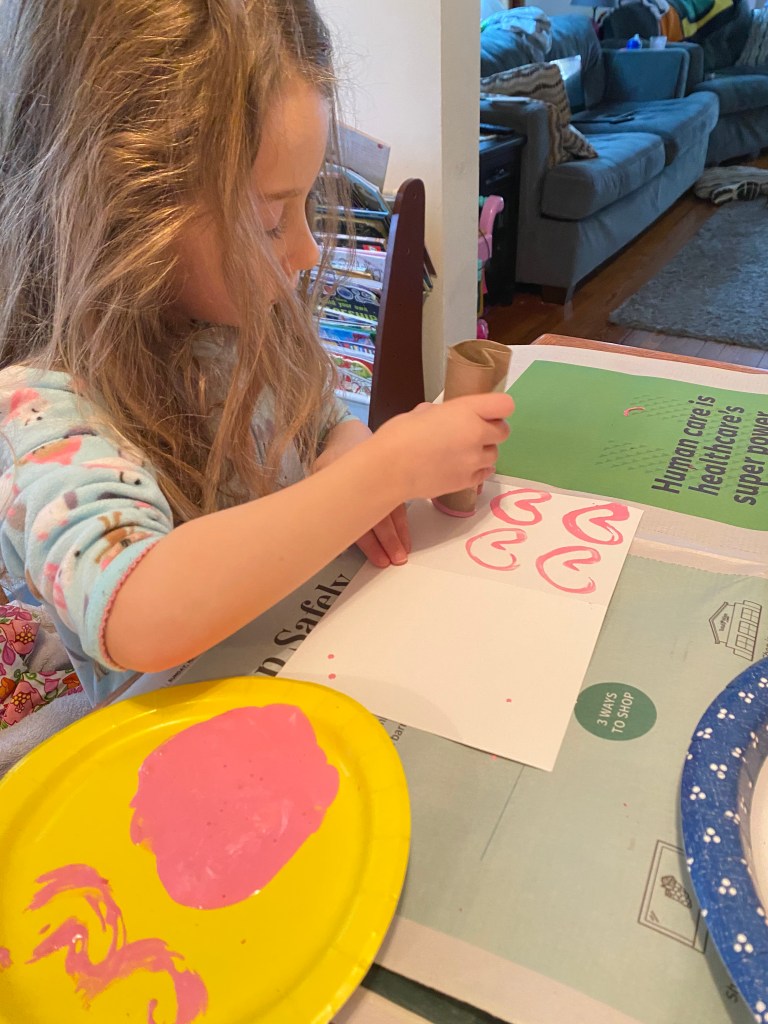
That’s it! So first, she showed me how to roll the tube so that it looked like a heart. Once that’s done, you tape it so it keeps that shape. I did have to add more tape as we tested the “stampers” so that the whole heart would show on the paper.
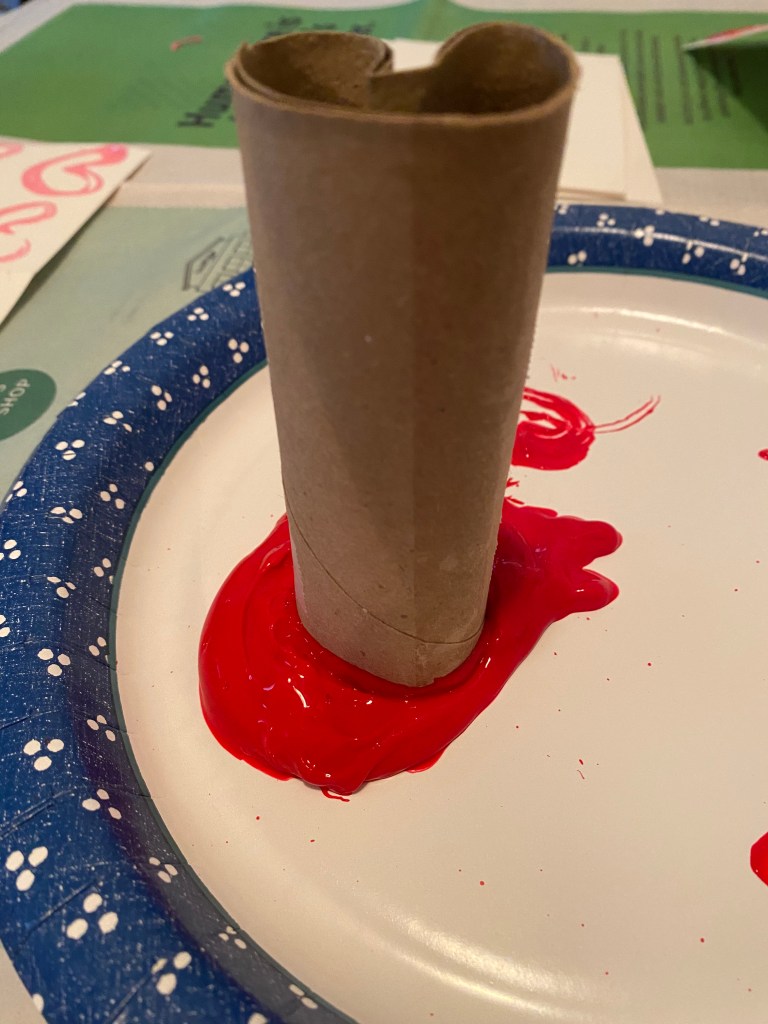
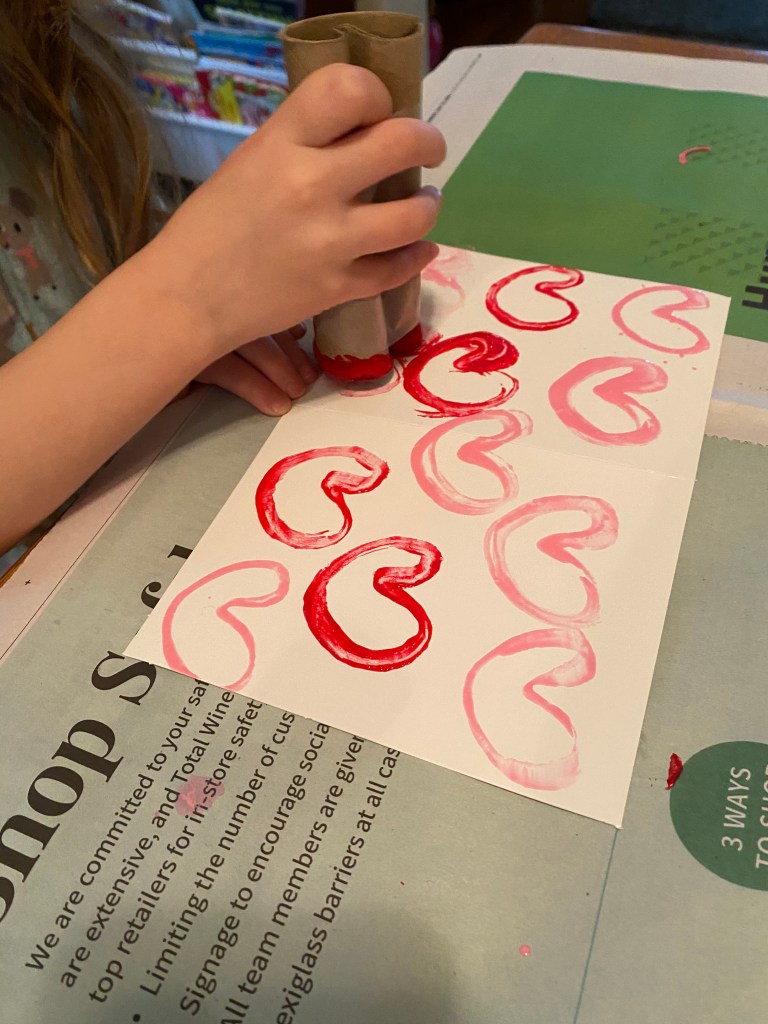
Then you dip it into the paint and use it as a stamper! This was a fun and easy project. We churned out a whole bunch of valentines for people, and had fun doing it.
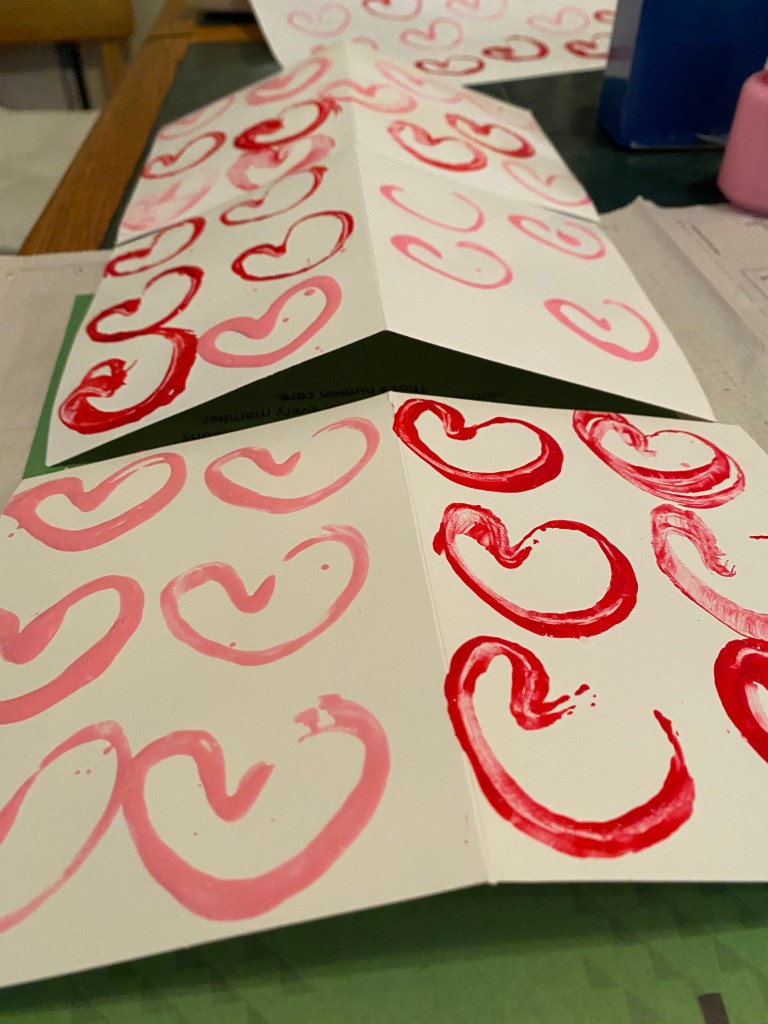
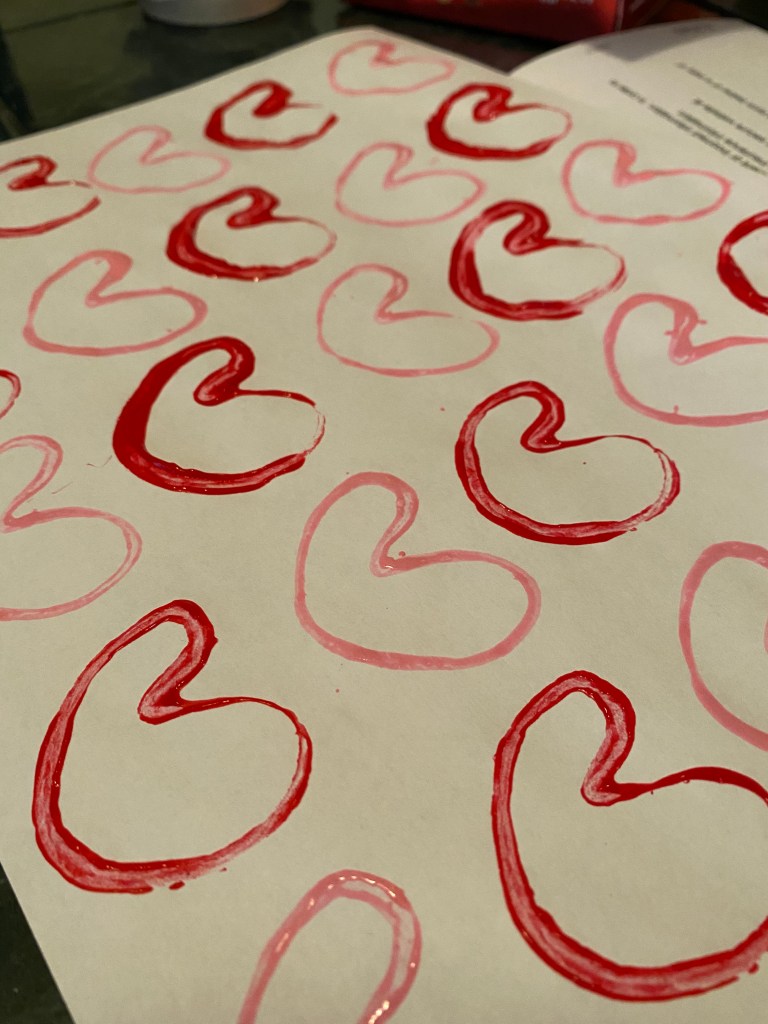
As you can see from the final product below, these turned out pretty nice. Amelia was a great teacher, it was a fun Friday morning craft, and it was an easy way to get her to create some valentines for the family. Now I just have to get her to write in them!
Amelia and I open up a science kit and explore colors.
To continue our science obsession, I pulled out a fun science kit I picked up at a yard sale. I was going to choose one of the projects it came with, but after Amelia really enjoyed mixing white and red to make pink with our crystal project, I figured I would continue with that theme.
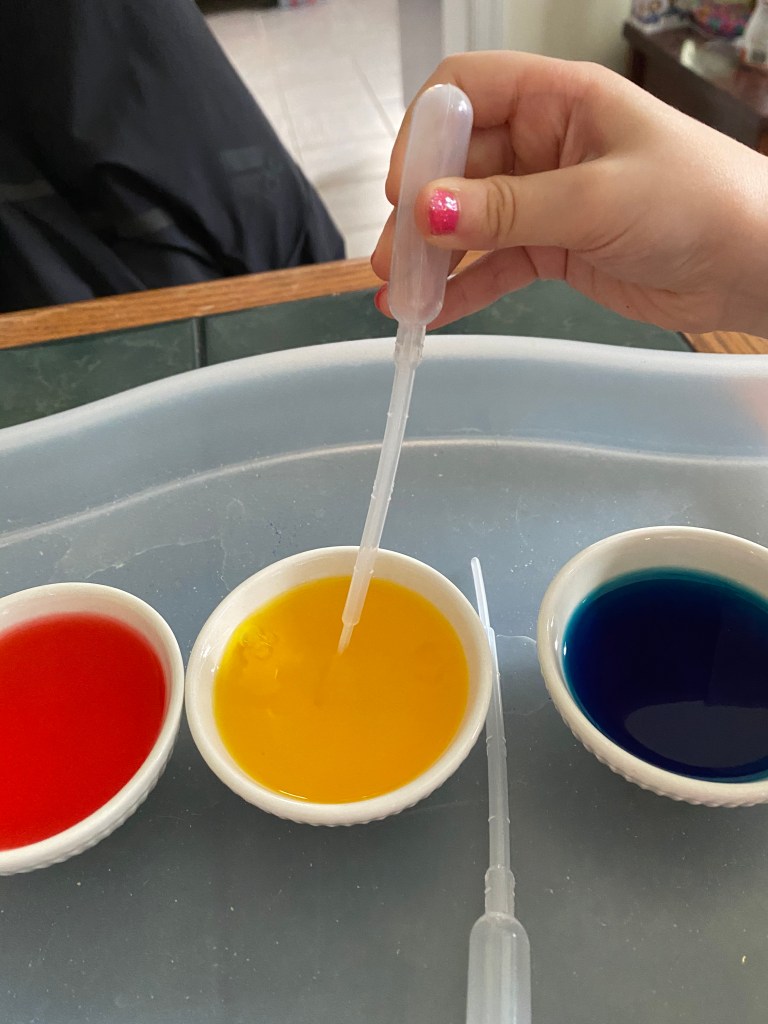
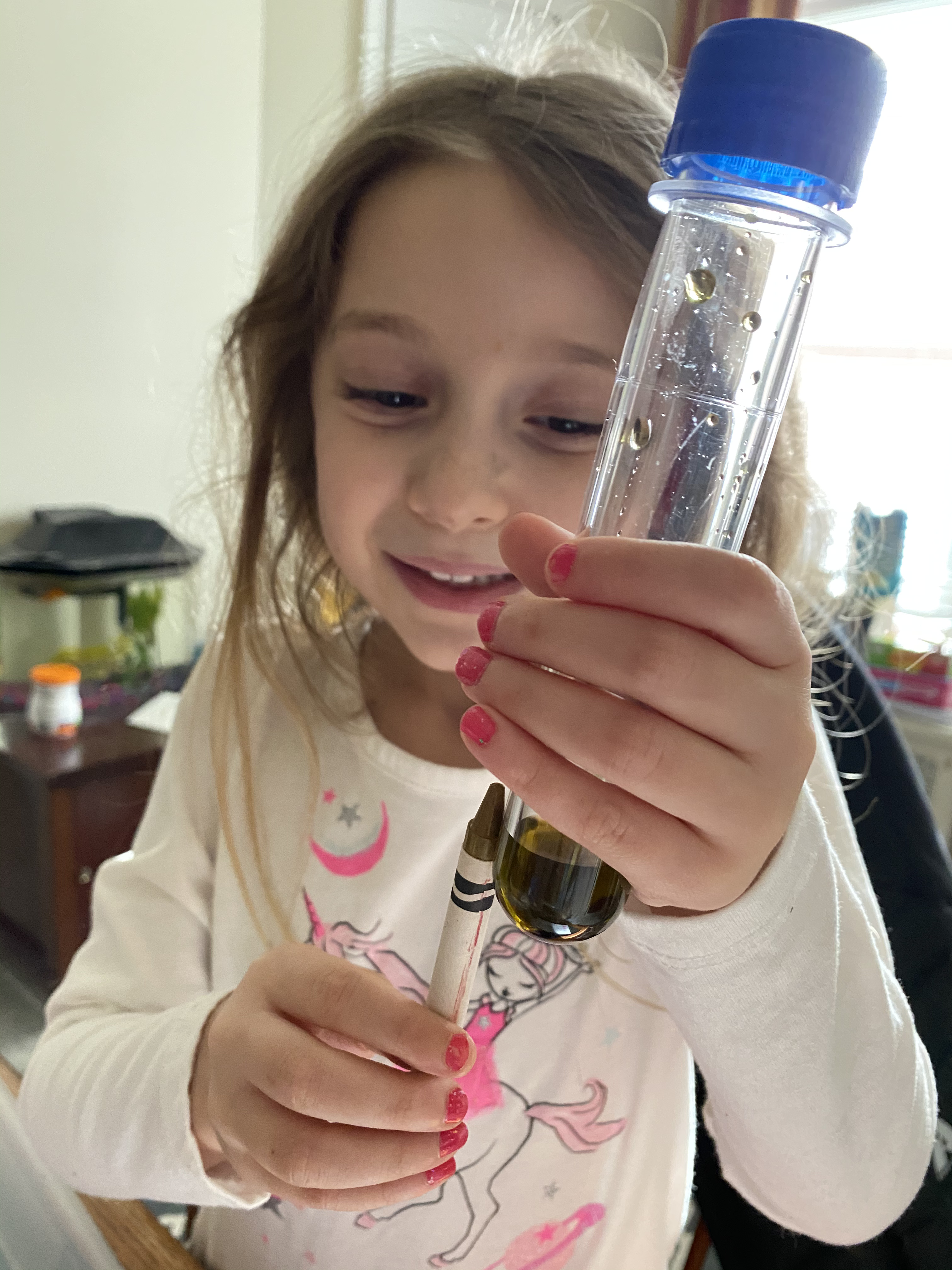
The kit I have came with a collection of kid-safe test tubes, droppers and other scientific items. So I grabbed some water, food dye of the primary colors and small bowls.
I had Amelia add two drops of each color to the bowls.
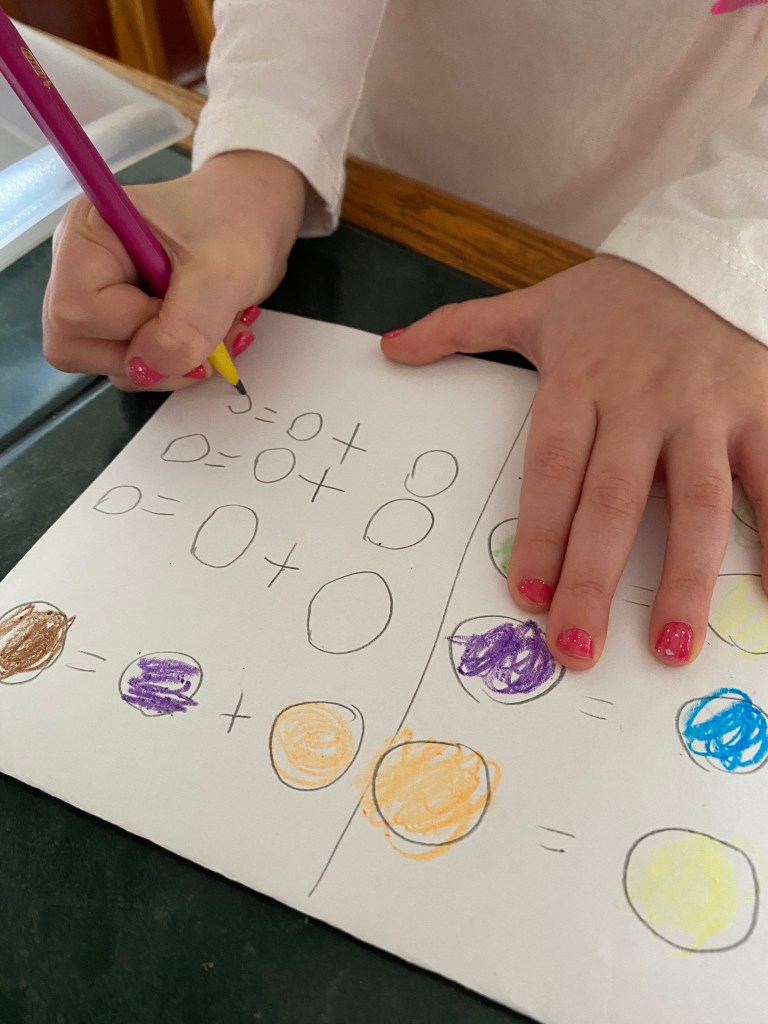
Even though she knows the color combinations from school, we started our experiment by drawing a grid that she filled out as we went along. At first it was simple, so we checked out what red plus yellow made, and yellow and blue, and so on.
I drew out circles so that she could record the results, which she also enjoyed because she felt like she was performing a real scientific study.
The grid we created to record our results.
I have to say it was a lot of fun for both of us. Amelia got such a kick out of using the test tubes and droppers.
As you can see on the grid, eventually we started mixing the new colors (secondary colors) with others to see what would happen. To be honest, most of them made a greenish-brown color. We tried to match the colors up with her Crayola Crayons as close as we could.
The bottom line is Amelia got some experience using the lab tools, and she quickly (after a minor spill) learned the importance of being careful along with proper care of the equipment. Mixing the colors proved what she had been taught in school, that yellow and blue make green, and so on. She thought that was pretty cool. It’s always good to find ways to reinforce the lessons kids learn in school.
Walden University perfectly summarizes the importance of science in the classroom . “…there are individual benefits to learning science, such as developing our ability to ask questions, collect information, organize and test our ideas, solve problems, and apply what we learn. Even more, science offers a powerful platform for building confidence, developing communication skills, and making sense of the world around us—a world that is increasingly shaped by science and technology.”
I saw a lot of this in our science experiments this week, although Amelia’s favorite part was definitely using the test tubes. My favorite was at the end when she said “Daddy, I think I want to be a scientist.” How cool is that?
SOUND OFF:What are some projects you have used with your kids that involve mixing colors? Let us know in the comments. Amelia and I are always looking for new projects.
No, that’s not a misspelled word, considering Amelia is only five. I spent some time with her creating collages from old magazines, National Geographic to be exact, and it was a great little lesson for our pod of one.
Amelia’s Grammy gave us a huge stack of old National Geographic magazines before the virus struck, so we used them. We’d already looked at them a bunch of times, and they were ready to be used in a craft.
First off, it was great practice for scissor safety and motor skills. We watched a few videos on scissor safety before the lesson, which were review for her since she learned it in preschool. But as we all know, it’s better to repeat the lessons from school, because repetition supports what they learn. We discussed handing off scissors to others, walking with scissors, and how to use them safely.
According to Pathways.org, motor skills are important because they are used “everyday throughout our lives. They help us move and do everything from lifting heavy items to typing on a keyboard. Motor skills and motor control begin developing after birth, and will progress as children grow. Having good motor control also helps children explore the world around them, which can help with many other areas of development.”
I know this is something that will be reinforced in kindergarten, so I figured we could practice cutting. At one point, Amelia’s teacher said she could use a little more work on motor skill development, which surprised me. We are a LEGO family, and Amelia helps me put sets together all of the time. I would think putting those tiny Lego pieces together exhibit excellent motor skills.
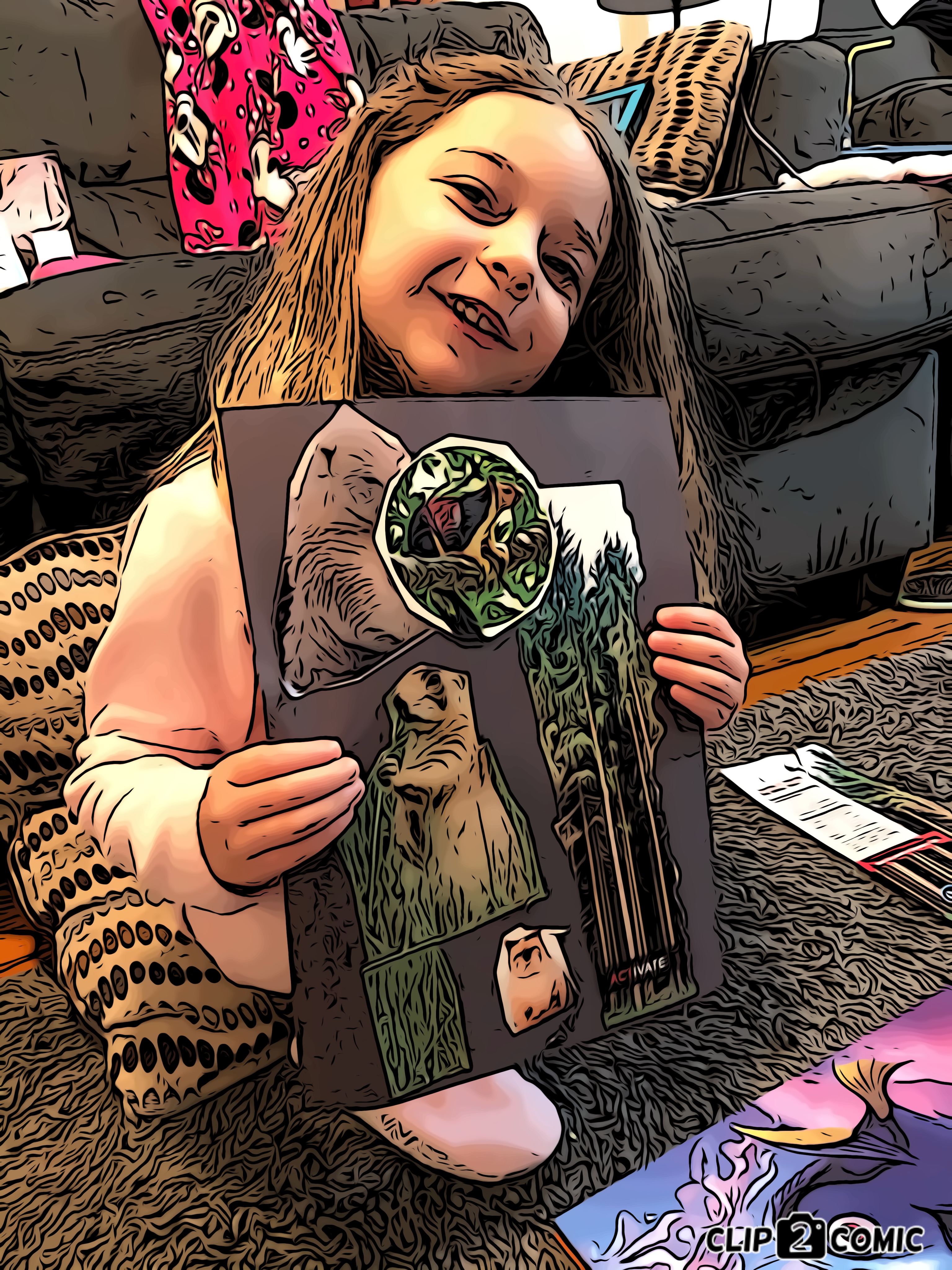
So I told Amelia we were making a collage, and she wanted to know what one was. I explained the basic idea to her. We were going to find pictures we liked in the magazine, cut them out, and then glue them onto a piece of paper wherever we wanted. She loved the idea so we got started.
I found a nice background and started with that. It was a two-page spread of shells, and I thought it would make a great background. Then I started cutting out animals and people to stick on top.
Amelia went the other route. She cut out all of the cutest animals she could find and started gluing them wherever she wanted.
In the end, we had fun. Who wouldn’t when scissors and glue sticks are involved, right? Amelia was quite proud of her project. We’ve practiced with scissors in many other lessons since then, but this was the first. We should probably create some collages again soon.





 Pod of One